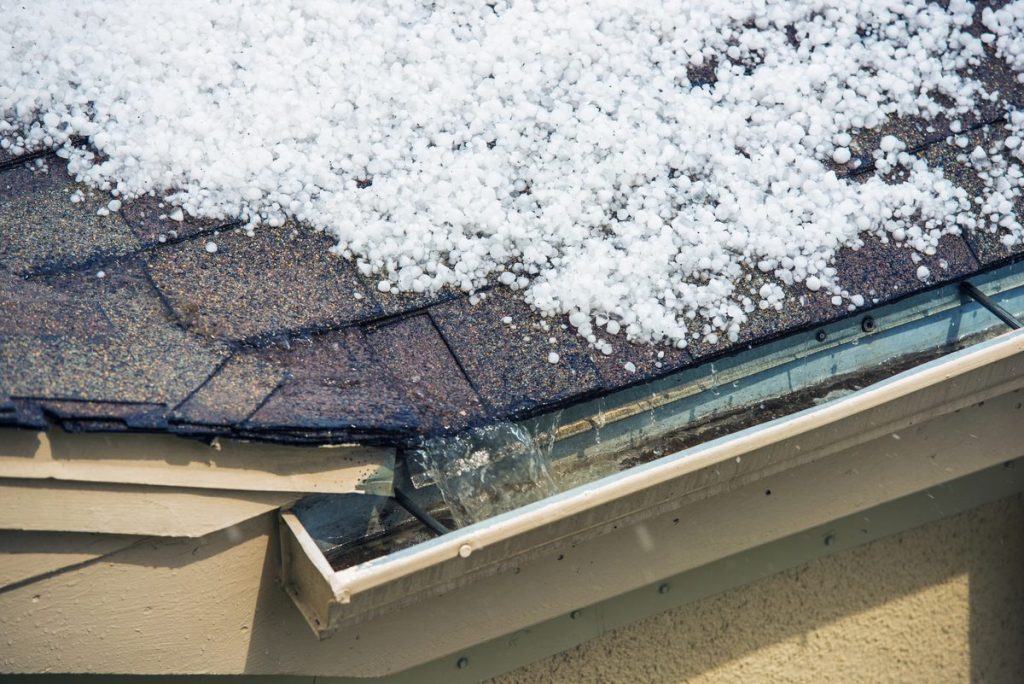
A hailstorm can roll through Dayton in ten minutes and leave damage that takes years to show up. The roof may look fine from the driveway. No leaks, no missing shingles. But hail damages and bruises shingles in ways you can’t always see from the ground.
After a hailstorm, look for dents on metal parts of the roof, granules piling up in your gutters, and dark, random spots on the shingles. If you see any of these signs of hail damage, get a roofer up there before the next storm does more damage.
What size of hail damages a roof?
Hail about 1 inch across, roughly the size of a quarter, can damage standard asphalt shingles. Heavier shingles usually hold up to around 1 1/4 inch hail. Older or worn shingles can be damaged by smaller hail than that.
Size isn’t the only factor. Wind pushes hail sideways, so one side of the house can take a beating while the other side looks untouched. The age of the roof matters, too. A 15 year old roof doesn’t shrug off hail the way a new one does.
Signs you can check from the ground
You don’t need to climb a ladder to spot the first clues. Walk the property after the storm passes and look for:
- Dents in gutters, downspouts and window screens
- Dings on metal roof vents, flashing and the AC unit
- Piles of shingle granules at the bottom of downspouts
- Shingle pieces or chips in the yard
- Dents or chipped paint on siding and deck railings
If the soft metal around your house is dented, the shingles took hits too.
What hail damage looks like on shingles
Up close, hail damage shows up as dark spots where the granules got knocked off. Those spots fall in a random pattern across the roof, not in neat lines. Press on one and it often feels soft, like a bruise on an apple.
That random pattern is what separates hail from normal aging. Wear and tear shows up evenly, like curled edges, small cracks across the whole roof, or blistering on the sunny side. Hail hits wherever it lands.
The real problem is what comes next. Once the granules are gone, the sun breaks down the exposed asphalt faster. A bruised shingle can crack within a season or two, and that’s when the leaks start.
Why you shouldn’t wait on hail damage
Most homeowners’ policies have a time limit for filing a storm damage claim, and it varies by insurer. Wait too long and a hail claim can turn into a repair you pay for yourself. Check your policy so you know your deadline.
Hidden damage also gets worse over an Ohio winter. Water gets into cracked shingles, freezes, expands, and opens the cracks wider. A small problem in October can be a ceiling stain by February.
What to do after a hailstorm
- Take photos of any dents, debris, or damage you can see from the ground, with dates.
- Stay off the roof. Wet shingles are slick and damaged ones can break under your feet.
- Call a local roofer for an inspection before you call your insurance company, so you know what you’re dealing with.
- Watch out for storm chasers. Out of town crews often knock on doors after big storms in Kettering, Beavercreek and Centerville, then disappear before the warranty matters.
Ram Roofing handles roof inspections, storm damage repairs and roof replacement for homes and businesses across Dayton and the Miami Valley. We’re local, and we’ll still be here after the storm season ends.
Frequently asked questions
Can hail damage a roof without causing a leak? Yes. Most hail damage doesn’t leak right away. The bruised shingles break down over the next few seasons, so the leak often shows up long after the storm.
Does homeowners’ insurance cover hail damage? Most policies cover hail damage, but coverage and deductibles vary. Many policies set a time limit to file, so check yours soon after the storm.
Can I see hail damage from the ground? Sometimes. Dents in gutters, vents and siding are good clues, but shingle damage usually takes a close look on the roof to confirm.
How long does a hail damage inspection take? Most roof inspections take under an hour, depending on the size and pitch of the roof.
Get your roof checked after the storm
If hail hits your neighborhood, don’t wait for a stain on the ceiling to tell you something’s wrong. A quick inspection now can save you a full replacement later. Call Ram Roofing at 937-882-5600 or visit www.ramroofingusa.com